Insurance Office in Texas
3306 Walnut St., Suite #403, Garland, TX 75042.
Tel: 469-407-6022
Email: phaletx@gmail.com












Insurance


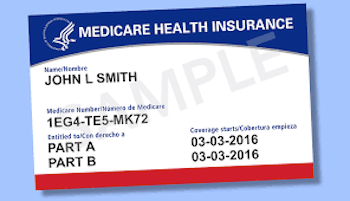
Our agency is dedicated to helping seniors navigate Medicare with ease, confidence, and peace of mind. Turning 65 is an important milestone, and with it comes the need for reliable healthcare coverage. Medicare plays a critical role in protecting older adults from high medical costs, ensuring access to essential services such as hospital care, doctor visits, prescription drugs, and preventive treatments.
We proudly offer free Medicare enrollment services to individuals aged 65 and older, as well as those who qualify due to specific needs. Our experienced team takes the time to understand each client’s unique health situation, financial concerns, and coverage preferences. We then guide them step-by-step through the enrollment process, explaining all available options including Parts A, B, C, and D in clear, simple terms.
As healthcare needs increase with age, having the right Medicare plan becomes essential for maintaining both health and financial stability. Without proper coverage, medical expenses can quickly become overwhelming. That’s why our mission is to ensure every senior receives the benefits they deserve—without confusion or stress.
With our personalized support, honest guidance, and commitment to excellence, we make Medicare simple, accessible, and tailored to each individual. Your health and security are our top priorities.
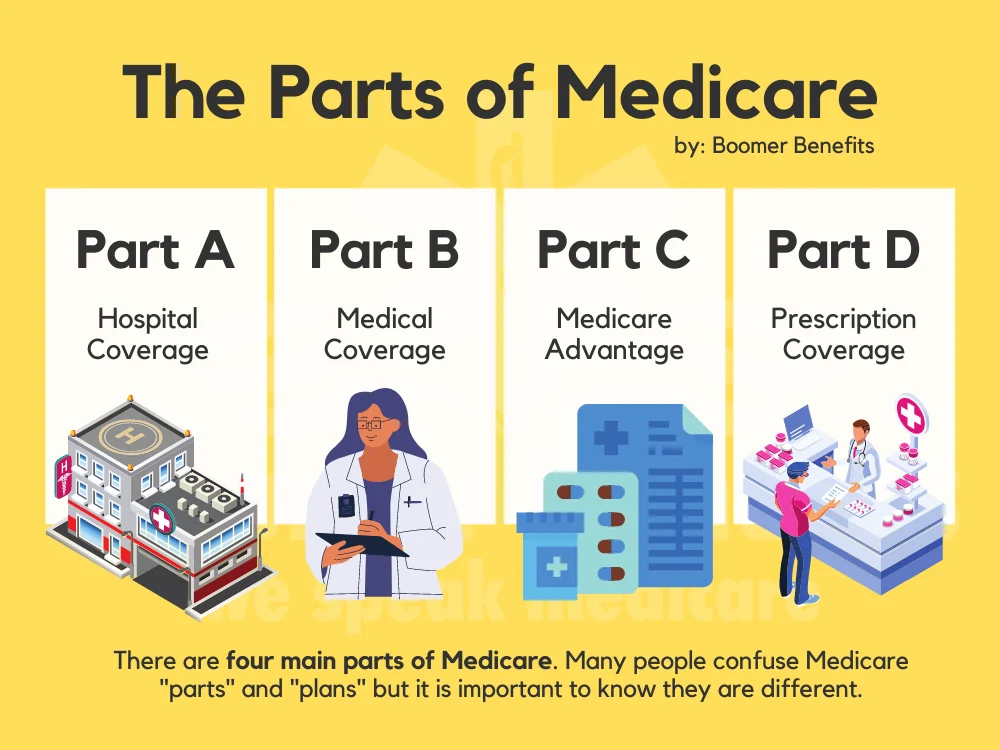
Medicare is a federal health insurance program in the United States designed primarily for people age 65 and older, as well as certain younger individuals with disabilities. It is divided into four main parts—each covering different healthcare needs and playing a vital role in protecting beneficiaries.
Part A (Hospital Insurance) covers inpatient hospital stays, skilled nursing facility care, hospice, and some home health services. It is essential because it protects individuals from the high costs of hospitalization and critical care. Most people qualify for premium-free Part A based on their work history.
Part B (Medical Insurance) covers outpatient care, doctor visits, preventive services, and medical supplies. This part is crucial for maintaining overall health, as it helps pay for routine checkups, early detection screenings, and necessary treatments that do not require hospitalization.
Part C (Medicare Advantage) is an alternative to Original Medicare (Parts A and B) offered by private insurance companies. It often includes additional benefits such as vision, dental, hearing, and sometimes prescription drug coverage. Part C is important for those who want more comprehensive, bundled coverage in one plan.
Part D (Prescription Drug Coverage) helps cover the cost of medications. This is especially important for seniors who rely on prescriptions to manage chronic conditions, as it reduces out-of-pocket drug expenses.
Together, these four parts of Medicare provide a well-rounded healthcare system, ensuring that individuals have access to hospital care, medical services, and medications—helping them maintain both their health and financial stability.

Medicaid and Medicare Supplement (Medigap) are very different, even though both help with healthcare costs.
Medicaid is a government assistance program (funded by federal and state governments) designed for people with limited income and resources. It can cover a wide range of services, including hospital visits, doctor care, long-term care, and sometimes dental and vision. In many cases, Medicaid pays most or all healthcare costs, including premiums, deductibles, and copays. It is especially important for low-income seniors, families, and individuals who need financial help to access care.
Medicare Supplement (Medigap), on the other hand, is private insurance that works alongside Original Medicare (Part A and Part B). It is not based on income. Instead, it helps cover the “gaps” in Medicare—such as deductibles, copayments, and coinsurance. For example, if Medicare pays 80% of a service, a Medigap plan may cover the remaining 20%. This gives people more predictable out-of-pocket costs and greater financial protection.
The key difference is:
* Medicaid = need-based public assistance.
* Medigap = optional private add-on coverage
Some people qualify for both Medicare and Medicaid (called “dual eligible”), and in those cases, Medicaid can act similarly to a supplement by covering many of the remaining costs that Medicare does not pay.
In short, Medicaid is for those who need financial help, while a Medicare Supplement is for those who want to reduce out-of-pocket expenses and enhance their Medicare coverage.